A Fourth year aerospace engineering student at Saint Louis University.
ION
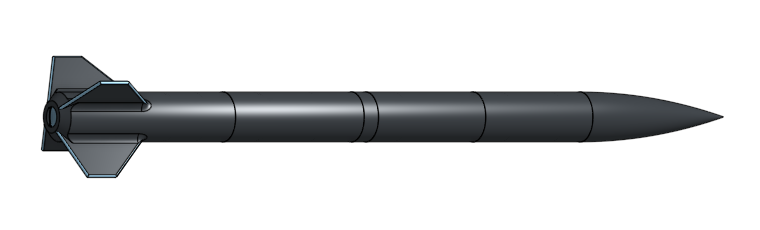
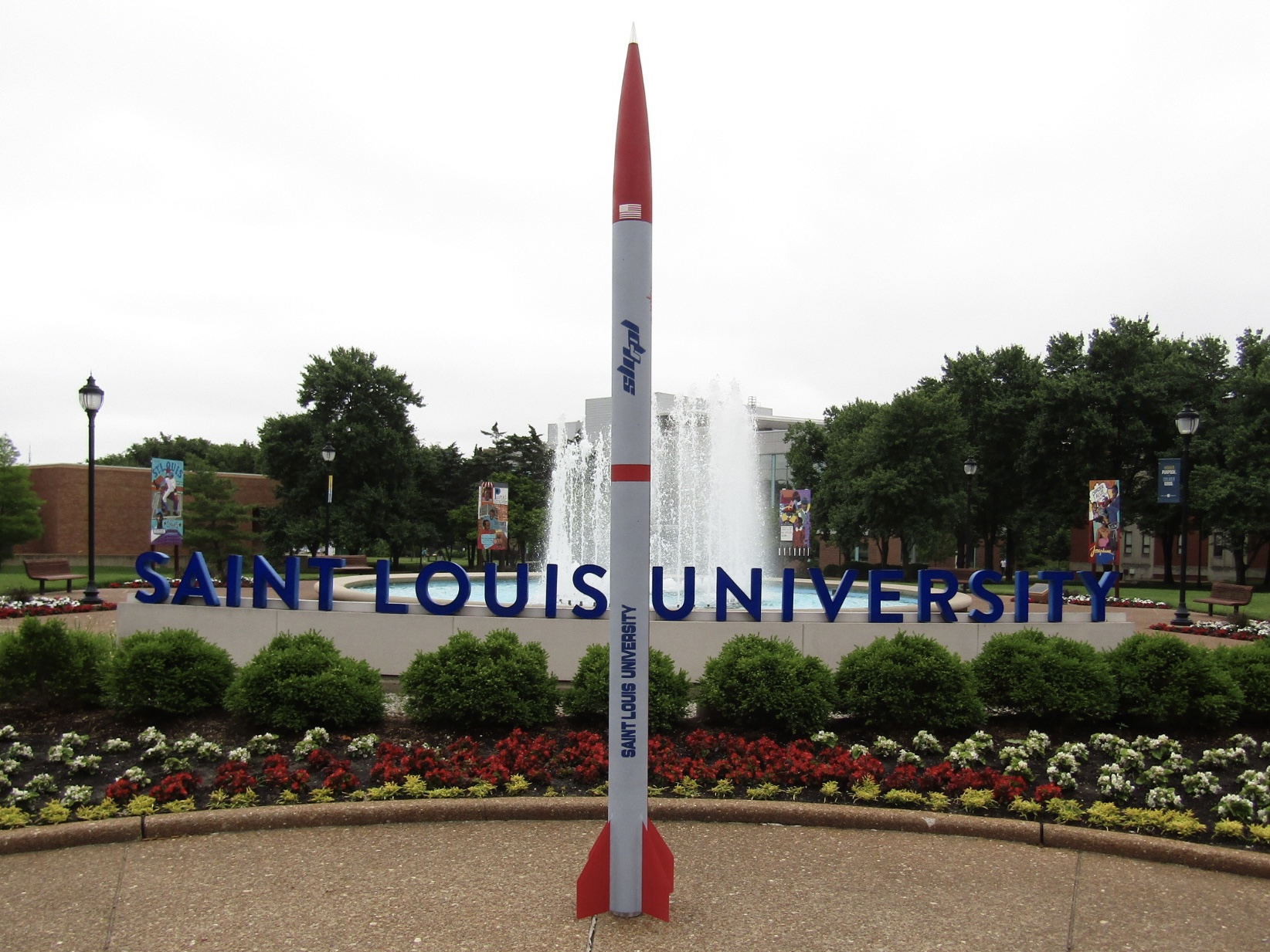
As the lead project manager and systems engineer for a four-member multidisciplinary team, I spearheaded the research, design, and manufacture of NOVA Project ION, an innovative 3-D printable rocket structure. The project was engineered to maximize scoring under NASA Student Launch criteria by strategically increasing the use of 3-D printed components. By leveraging X-winding methodologies, commercial-off-the-shelf (COTS) tubing, and a modular design featuring quick section replacement and integration, our team successfully minimized the manpower required for field assembly and maintenance while pioneering new structural prototyping techniques.
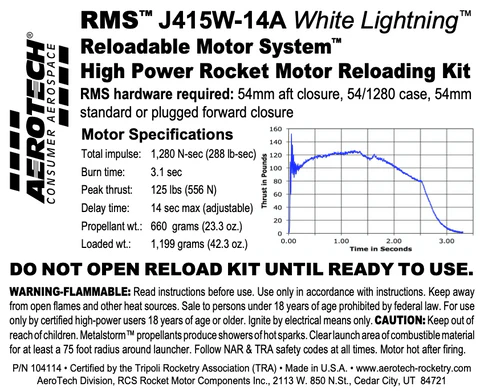
The flight architecture was meticulously planned around a target altitude window of 4,000 to 6,000 feet. To achieve this, we selected an AeroTech J415W reloadable rocket motor capable of delivering a peak thrust of 556 N and reaching a projected apogee of 5,920 feet. Flight simulations confirmed that the rocket attains high velocity as it leaves the launch rail, guaranteeing immediate aerodynamic stability. Additionally, a dual-deployment recovery system was integrated into the design to guarantee that the rocket met the strict requirement of a controlled descent rate of 15 feet per second.
The manufacturing process began with rigorous material preparation, including drying NylonX-Carbon filament for 12 hours at 150°F to ensure maximum structural integrity. Due to the 10x10x10-inch build volume constraints of the SLURPL printer, the lower body tube was segmented into two parts, with the lower section featuring four 3D-printed trapezoidal fins. These sections connect seamlessly via an internal precision coupler to ensure proper alignment and adhesion, while an additional carbon-fiber epoxy mixture was applied directly to the fins to handle high-stress loads. A COTS fiberglass avionics bay was also incorporated to ensure reliable communication and telemetry during flight.
Beyond the airframe itself, an inline payload system was designed to meet NASA Student Launch requirements through a robotic pH level sample collection and testing mechanism. The onboard pH computer was fully assembled and tested, successfully outputting live pH readings alongside a clear "Habitable / Unhabitable" status display. The final system validation is scheduled for an upcoming test flight in October 2026, which will test the structural and aerodynamic performance of the 3D-printed airframe prior to the full deployment of the scientific payload.
BALEEN
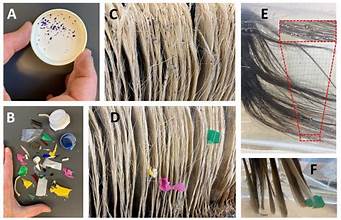
The BALEEN project has the main goal of creating autonomous systems aimed at alleviating the world crisis of micro plastic pollution, using aquatic biomimicry-inspired filters. Through the study of the high-efficiency filtration mechanisms of the Baleen whales, the team of engineers created the filtrations system, which comprises fibers used to trap the micro plastic. As the team has grown, the projects have expanded from the incorporation of these filters to flow optimization, breaking down the micro plastic, other aquatic filter nations, as well as underwater drones equipt with a series of these filters, which is the research I conducted. The mission of the project has the goal of deploying autonomous underwater drones, which can navigate through the water, effectively feeding on the micro plastic, thereby alleviating the aquatic ecosystem crisis.
As an undergraduate research assistant for Project BALEEN, I designed a 3D-printable airframe and high-pressure electronics enclosure rated up to 80 meters, and I conducted controlled flow-rate field and lab testing of microplastic particles to optimize BALEEN filter intake geometry. Within the lab and water tunnel, I tested different filter orientations and angles to determine the maximum capture rate, optimized drone test section orientation for the best performance results, and assisted with constructing a new water tunnel to better simulate field environments.
During the summer of 2025, I expanded this research beyond Earth by developing a space vehicle proposal adapting CleanCurrent for extraterrestrial ocean exploration, specifically modeling vehicle viability for biomarker and microorganism detection in the subsurface seas of Jupiter's moon, Europa. This research focused on understanding Europa's icy ocean environment, analyzing structural design approaches, and creating specialized manufacturing techniques required to sustain extreme aquatic and extraterrestrial conditions as a proof-of-concept framework for future space missions.
During the summer of 2026, we worked closely with St. Louis County during active field testing, where we developed four distinct deployment systems and tested configurations featuring 2 to 4 filter integration stages. Our first setup used 2 mesh filters at the inlet to capture organic matter and larger trash, while the second through fourth stages integrated baleen filters starting at 5 layers (which were lab-tested to entrap uniform 1 mm pellets).
Our testing campaigns included several specific configurations to evaluate performance. For our single-stage lake outlet test, we inserted an 8-layer baleen filter system into a 4-inch lake outlet pipe, allowing water to flow through naturally while processing approximately 1,000 gallons, though this is still awaiting final analysis. To compare stagnant versus towing collection performance, we conducted parallel boat tow testing at 1 to 2 mph across multiple passes on the same day, utilizing a water flow rate of about 2 mph at the outlet, which is also awaiting analysis. Additionally, we performed a second lake outlet test using multistage filtration—featuring 2 filter inlets and a second stage with 5 filters—though a reduced water velocity of approximately 0.6 mph severely dropped processing volume to just 400 gallons during the testing period. Finally, we evaluated how porosity affects inlet velocity across multiple pipe setups. This included testing 6 to 10 layers of mesh filters in pipe 1, comparing shorter versus longer section lengths in pipe 2, testing baleen filters with varying vertical and horizontal layer removals in pipe 3, and running a single-stage 2-inch diameter by 24-inch length test for CleanCurrent drone analysis, which was ultimately inconclusive due to restricted time.
Moving forward, our next steps involve continuing field testing of the filtration systems to optimize gallons processed and evaluate varying testing depths, alongside the physical deployment of the CleanCurrent drone in both the water tunnel and field environments.
Starlance
Starlance is a high-performance sounding rocket built for the Intercollegiate Rocket Engineering Competition. The rocket was engineered to compete in the 10,000 ft SRAD competition, which is part of the Student Researched and Developed category. It is a hybrid rocket made from in-house airframe components and a custom-made solid propellant. The mission design involved a fiberglass nose cone and upper body tube, along with a lower airframe built using an X-winder filament winding machine. The main mission objective was to validate a proof-of-concept experimental energy harvesting device based on the Seebeck effect, which would be used to power a bone conduction acoustic communication device during recovery.
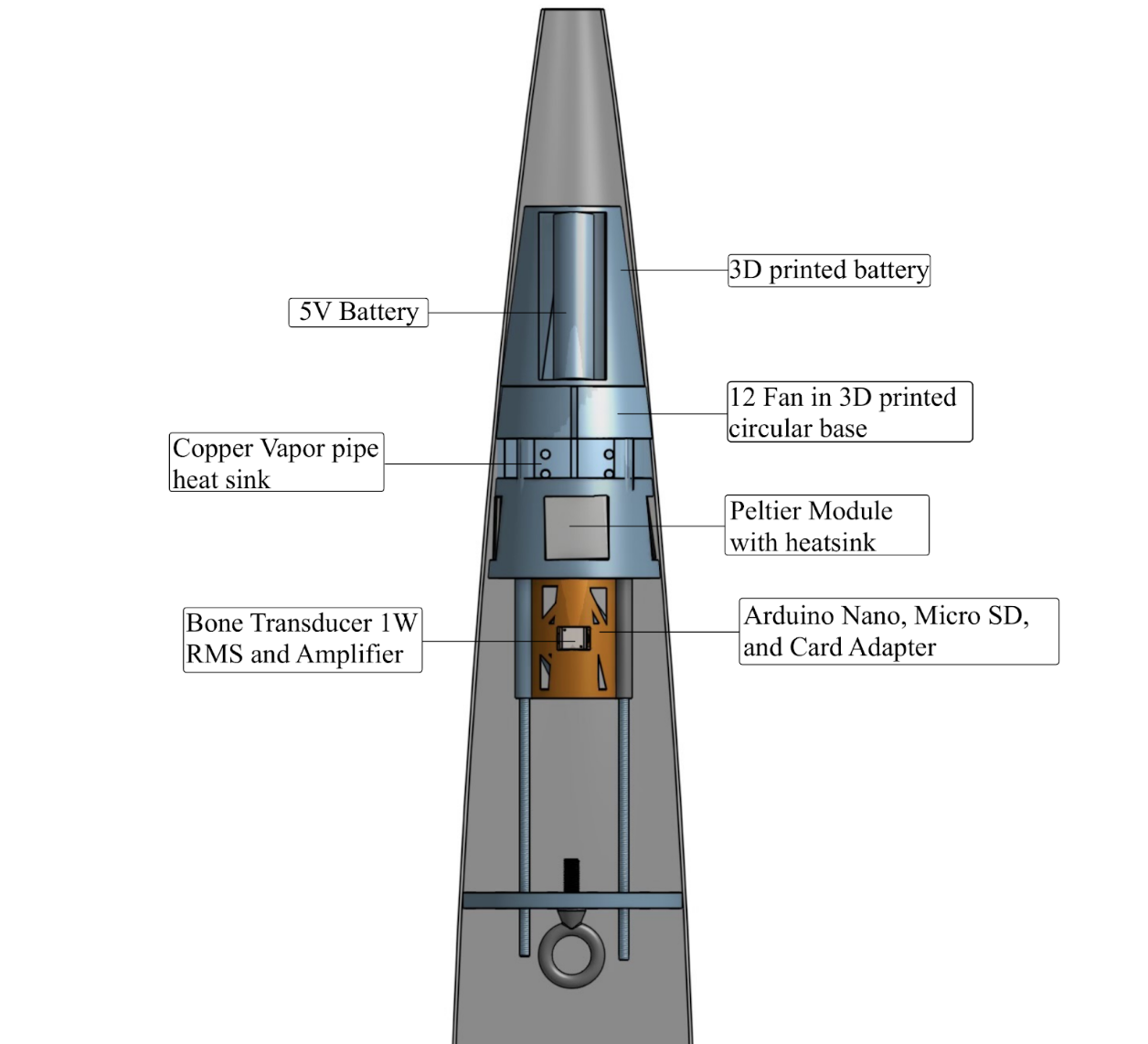
In the role of Payload Lead, I led the design of a thermoelectric generator system, which aimed at harnessing the potential of the temperature gradient to generate electrical current. The system comprised four Peltier modules, which were oriented to take advantage of the temperature gradient between the solar-heated airframe and the actively cooled interior. In order to cool the cold side of the Peltier, I also created a copper vapor pipe heat sink, which utilized a 5V battery-powered fan. The generated electrical current powered the payload's 'brain,' which comprised an Arduino Nano microcontroller with a data logger, thereby successfully driving a bone conduction transducer, thereby essentially creating a speaker from the payload structure.
The propulsion system used for Starlance was a high-performance, student-designed M-Class Solid Motor, which used an in-house-designed Mixed Ammonium Perchlorate Composite Propellant. The motor was tested for safety and structural integrity by conducting three successful static fire tests, after which the motor was ready for integration. The motor performed admirably during operation, producing a peak thrust of 4,780 N and an average thrust of 3,838 N, thus producing a total impulse of 11,747 N/s. The high-performance propulsion system was carefully designed to provide the high thrust-weight ratio necessary to carry the experiment, Seebeck, to the desired altitude.
Starlance excelled greatly in the IREC competition, where a successful ignition and steady ascent to a total height of 9,597 feet AGL were attained. This achievement, coupled with the successful integration of the SRAD motor, enabled the team to achieve 4th Place in the SRAD Category and a 36th Place overall ranking, which comprised over 150 teams worldwide. These successes attest to the structural integrity of our in-house filament-wound airframe and the reliability of our student-designed propellant and payload systems.
This is bold and this is strong. This is italic and this is emphasized.
This is superscript text and this is subscript text.
This is underlined and this is code: for (;;) { ... }. Finally, this is a link.
Heading Level 2
Heading Level 3
Heading Level 4
Heading Level 5
Heading Level 6
Blockquote
Fringilla nisl. Donec accumsan interdum nisi, quis tincidunt felis sagittis eget tempus euismod. Vestibulum ante ipsum primis in faucibus vestibulum. Blandit adipiscing eu felis iaculis volutpat ac adipiscing accumsan faucibus. Vestibulum ante ipsum primis in faucibus lorem ipsum dolor sit amet nullam adipiscing eu felis.
Preformatted
i = 0;

while (!deck.isInOrder()) {
    print 'Iteration ' + i;
    deck.shuffle();
    i++;
}

print 'It took ' + i + ' iterations to sort the deck.';